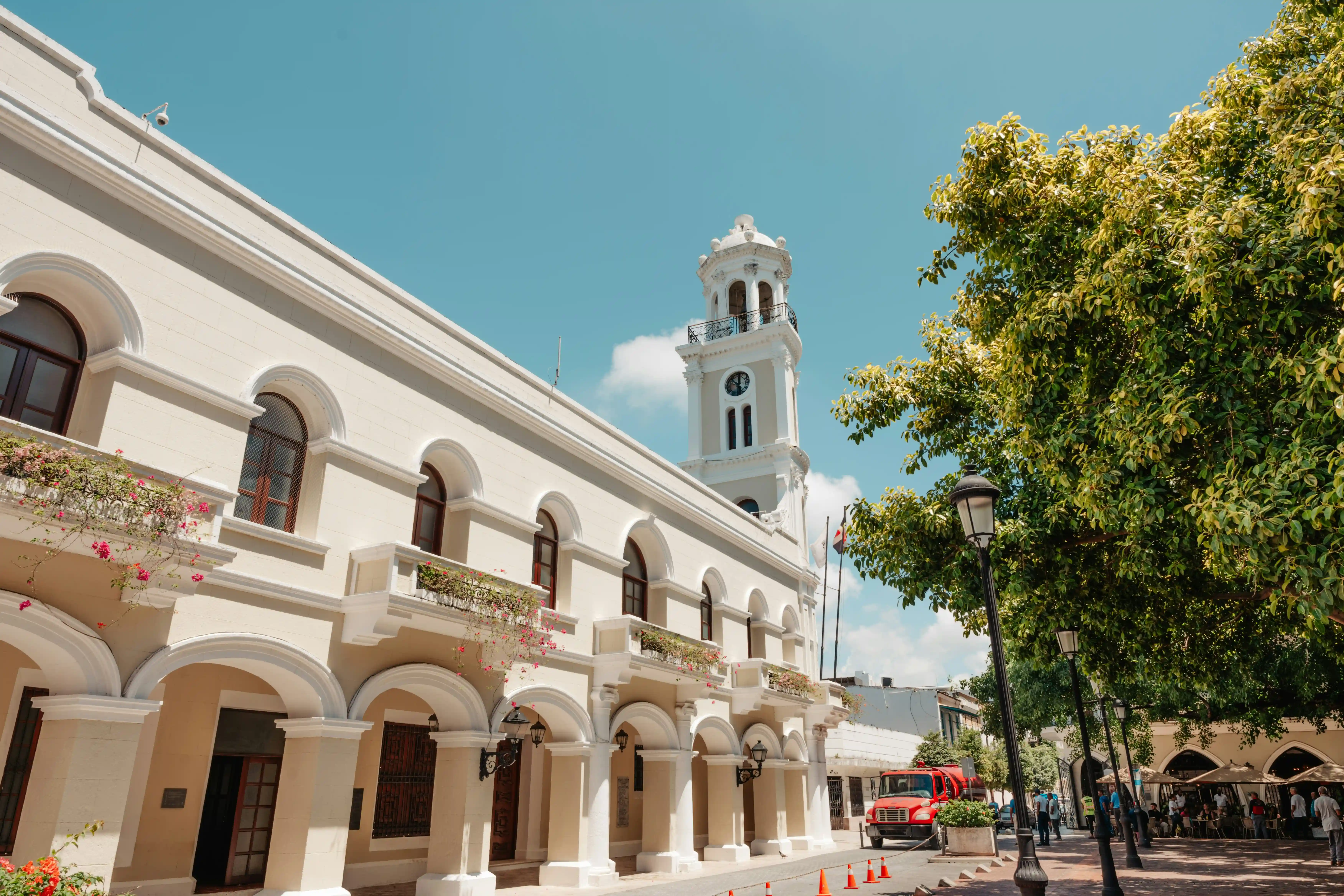
Santo Domingo
Explore Santo Domingo, the Dominican capital: its central neighborhoods, the Colonial City, schools, hospitals, and an urban real estate market
Overview
Santo Domingo is the Dominican Republic's capital and its principal center of government, business, education, and healthcare. Set along the Caribbean coast at the mouth of the Ozama River, it is a city where centuries of history are part of everyday life, from the streets of the Colonial City to the residential towers and commercial avenues farther west.
The historic center traces its origins to the late 15th century and is recognized by UNESCO for its influence on colonial urban planning in the Americas. Today, that heritage exists alongside contemporary neighborhoods, universities, hospitals, offices, restaurants, and a busy cultural calendar.
For anyone considering a move or a property purchase, Santo Domingo offers a different experience from the country's coastal resort markets. Here, location is shaped as much by the school run, the commute, and access to daily services as it is by the home itself.
A Capital Shaped by History and Everyday Life
Santo Domingo's character becomes clearer as you move through it. The Colonial City brings together restored historic buildings, small plazas, museums, cafés, and residential streets where people still live and work. A short drive away, the wider city takes on a different rhythm: apartment towers, shopping centers, office districts, established family neighborhoods, and streets that remain active well into the evening.
The Malecón, running along the waterfront, gives the capital a strong connection to the Caribbean, while public parks and cultural venues provide space for recreation away from its commercial corridors. The city is also a natural base for exploring other parts of the country, including Santiago and the mountain communities around Jarabacoa.
Daily life is largely urban. Supermarkets, pharmacies, gyms, banks, coworking spaces, and restaurants are widely available, especially in the central districts. Spanish remains the language of everyday life and administration, even though English is common in some international business and educational environments. As in many large cities, the convenience of a particular address depends heavily on where residents work, study, and spend their time.
Getting to Know the Neighborhoods
Much of Santo Domingo's residential property market is concentrated in the Distrito Nacional, but the neighborhoods within it differ in density, architecture, atmosphere, and price. Even neighboring sectors can suit quite different routines.
Piantini
Piantini is one of the capital's higher-priced apartment markets, with modern residential towers, offices, restaurants, and established commercial facilities close together. BlueMall and other retail destinations contribute to its lively, central setting. The area appeals to residents who value proximity to business districts and dining, although building amenities, traffic, and street activity vary by address.
Naco
Immediately beside Piantini, Naco mixes older apartment buildings with newer towers, offices, shops, and services. Its variety of building ages and layouts creates a broad selection of properties. For buyers, comparing maintenance standards, parking provision, and shared facilities can be as important as comparing floor area or asking price.
Bella Vista
Bella Vista combines established residential streets with apartments, commercial services, medical offices, and convenient connections to the surrounding city. Its mix of housing types and proximity to shopping and recreational areas make it worth considering for both individuals and families who want a central location without necessarily living in the busiest business district.
Serrallés and Evaristo Morales
These neighboring sectors provide further options near the city's central commercial corridor. Serrallés has residential streets, apartment buildings, and easy access to shopping, while Evaristo Morales offers a varied collection of mid-rise residences and newer developments. Both are relatively convenient to nearby services, but street conditions and building density differ within each area.
Colonial City
The Colonial City offers a different type of urban living, with historic architecture, walkable blocks, restaurants, cultural institutions, and a well-established visitor economy. Some properties occupy restored buildings with distinctive layouts and architectural details. Buyers should examine the practical implications of heritage protections, building condition, parking, and renovation approvals before purchasing.
Arroyo Hondo and Cuesta Hermosa
For those seeking more space, Arroyo Hondo and Cuesta Hermosa include established houses, private residences, and newer apartment developments in a greener, more residential setting. Properties here can offer larger interior and outdoor areas, though commute times and access to major roads vary considerably within the broader neighborhoods.
Taken together, these areas demonstrate why Santo Domingo is best understood neighborhood by neighborhood. A central apartment, a restored home in the Colonial City, and a family house in a quieter residential sector may all be within the same capital, yet offer very different daily experiences.
Education, Healthcare, and the Practicalities of City Living
Education is one of the reasons families consider Santo Domingo. The capital has a wide selection of public, private, bilingual, and international schools, including Carol Morgan School and Saint George School, alongside universities and specialized educational institutions. Curricula, language of instruction, grade availability, fees, and admissions requirements differ, so families should evaluate individual schools rather than assume that every international program is comparable.
School location can also influence a family's choice of neighborhood. A relatively short distance on a map does not always translate into a quick journey during morning or afternoon traffic, making trial commutes particularly useful before settling on an address.
Healthcare is another established part of the city's infrastructure. CEDIMAT, Hospital General de la Plaza de la Salud, and Hospiten Santo Domingo provide a range of medical and specialist services. The breadth of facilities is an advantage for residents, although insurance acceptance, appointments, emergency arrangements, and specialist availability should still be checked directly with each provider.
The same practical approach applies to residential buildings. Backup electricity, water storage, elevators, parking, security, and homeowners' association management vary from one property to another. In an established tower, it is worth reviewing maintenance records and building finances; in a new development, the construction schedule and the delivery of shared facilities deserve equal attention.
Getting Around and Staying Connected
Las Américas International Airport serves the capital and provides international connections, generally reachable by road from the city's central areas in around half an hour or longer, depending on traffic.
Within Santo Domingo, the Metro, urban bus routes, and cable-car services provide alternatives to private vehicles in the areas they serve. The Line 2C extension toward Los Alcarrizos began operating in February 2026, expanding rail access to the western side of Greater Santo Domingo. Cars, taxis, and ride-hailing services nevertheless remain important for journeys beyond these transport corridors.
Traffic is a regular part of life in the capital, especially around schools, commercial centers, and peak commuting hours. For many households, choosing a neighborhood that works with their daily routes is one of the most useful ways to improve convenience.
Outside the city, nearby Boca Chica and Juan Dolio offer options for beach trips, while museums, theaters, galleries, concerts, and restaurants provide plenty to explore closer to home. Santo Domingo's cultural calendar and historic neighborhoods give the city its own appeal, independent of the country's resort destinations.
The climate is tropical and warm throughout the year, with periods of heavier rainfall. The Atlantic hurricane season runs from June through November. For property owners, drainage, ventilation, waterproofing, and building maintenance deserve attention, particularly in older buildings or low-lying streets.
Who Chooses Santo Domingo
Santo Domingo is home to long-established Dominican households as well as professionals, entrepreneurs, university students, returning Dominicans, diplomats, and international residents. Some prioritize work and schools within the central districts, while others choose residential sectors that offer more space or a quieter setting.
The city's year-round economy also shapes its rental market. Apartments are leased to professionals, families, students, and other long-term residents, with demand and asking rents varying substantially between neighborhoods and property types. Rental properties should be evaluated according to location, building quality, maintenance fees, vacancies, and realistic operating expenses, rather than assuming that a central address alone guarantees returns.
Real Estate Vibe
Apartments account for much of the central market, while houses are more prominent in selected residential areas. Santo Domingo offers everything from established mid-rise buildings to newer towers with pools, gyms, and shared facilities. Prices depend heavily on sector, size, age, parking, and building standards.
The figures below are indicative asking-price references, not verified closing prices. Apartment figures describe the median asking prices observed in selected sectors in a February 2026 listing analysis; house ranges are illustrative bands from the supplied review.
Property Type | Indicative Price Reference | Popular Style |
|---|---|---|
Apartments in Naco | Around US$267K median asking price | Established apartments and modern towers |
Apartments in Bella Vista | Around US$280K median asking price | Urban residential with shared amenities |
Apartments in Piantini | Around US$310K median asking price; premium towers higher | Contemporary high-rise |
Houses in Arroyo Hondo & Cuesta Hermosa | Approximately US$525K–US$1.5M | Family residences and custom homes |
Apartment medians are based on one market dataset and are not directly comparable to the broader house ranges. See the sector pricing analysis. Actual listings may fall substantially above or below these figures.
Market Snapshot
Santo Domingo has one of the country's broadest urban housing markets, supported by employment, education, public institutions, and demand for permanent residences. Within that market, the value of location is particularly clear. An apartment near offices, schools, and commercial services can be priced very differently from a similarly sized home in another part of Greater Santo Domingo.
Published listing analyses provide useful points of reference, but they do not establish final transaction prices or guarantee how quickly a property will sell. The distinction is especially important in Santo Domingo, where building age, amenities, and location can affect both asking prices and rents.
Category | Overview |
|---|---|
Indicative property value | Selected central apartment sectors show median asking prices around US$267K–US$310K in a February 2026 listing analysis; individual properties vary widely |
Rental market | Predominantly long-term residential leasing, including professionals, families, and international residents; asking rents vary by sector and property size |
Popular among | Dominican families, professionals, returning residents, students, diplomats, and urban property investors |
Community atmosphere | Urban, culturally active, and varied, with busy commercial districts and more residential pockets |
Investment appeal | Year-round housing demand, access to major services, and a wide selection of property and rental types |
These descriptions use asking-price and rental-listing evidence, not independently verified closed-sale averages or net investment returns. For current market context, consult sector prices and rental listings.
Property Taxes and Purchase Considerations
Real-estate transfers in the Dominican Republic are generally subject to a 3% transfer tax, calculated according to the applicable valuation rules and exemptions. The annual Impuesto al Patrimonio Inmobiliario (IPI) may also apply depending on the owner's taxable property holdings, valuation, and the current exemption threshold. The DGII transfer guidance and IPI information provide official reference points. Certain qualifying developments may receive tax benefits under applicable incentive programs, but these should be checked for the specific project rather than assumed.
For off-plan purchases, review construction progress, completion dates, contractual protections, and the delivery of shared amenities. For resale properties, verify ownership documents, recorded encumbrances, outstanding association dues, and the condition of the building. Intended rental use should also be confirmed against building rules and applicable regulations.
In a dense city market, practical details such as parking allocation, backup power, water storage, noise, drainage, and elevator maintenance can have a significant effect on everyday comfort and long-term ownership costs.
Advantages and Considerations
Advantages | Considerations |
|---|---|
Wide selection of schools, universities, hospitals, and specialist services | Traffic can make proximity to work or school more important than distance alone |
Diverse apartment and residential property options | Asking prices and building standards differ significantly between sectors |
Established demand for year-round residential rentals | Maintenance fees, competition, and vacancies affect actual rental performance |
Historic neighborhoods, cultural venues, restaurants, and urban amenities | Central areas can be busy, and building-specific noise and parking need checking |
International airport, Metro, and regional road connections | Public transport coverage varies, and many journeys still depend on road traffic |
Final Thoughts
Santo Domingo combines the practical resources of a national capital with a cultural and architectural identity that stretches back centuries. Historic streets, active commercial neighborhoods, established family sectors, and newer residential developments create a city with many different ways to live.
Its strongest advantage is the range of choices within one urban area: schools and universities, medical services, professional opportunities, cultural life, and homes suited to different needs. Those choices also make local knowledge important. A neighborhood that works beautifully for one household may be less convenient for another because of commuting patterns, school routes, or building characteristics.
For buyers and future residents, getting to know Santo Domingo means looking beyond the individual property and understanding the daily life surrounding it. That is where the city's different neighborhoods begin to reveal their character.

Get to know The Neighborhoods
Discover what makes each neighborhood unique and find the one that fits your lifestyle
Explore Other Cities
See what’s nearby and find the one that feels like home


Listings in this city
Properties in Santo Domingo
Property Advisors in Santo Domingo