La Romana
An established Caribbean city where everyday Dominican life sits alongside golf communities, marinas, and some of the southeast coast’s best-known destinations
Overview
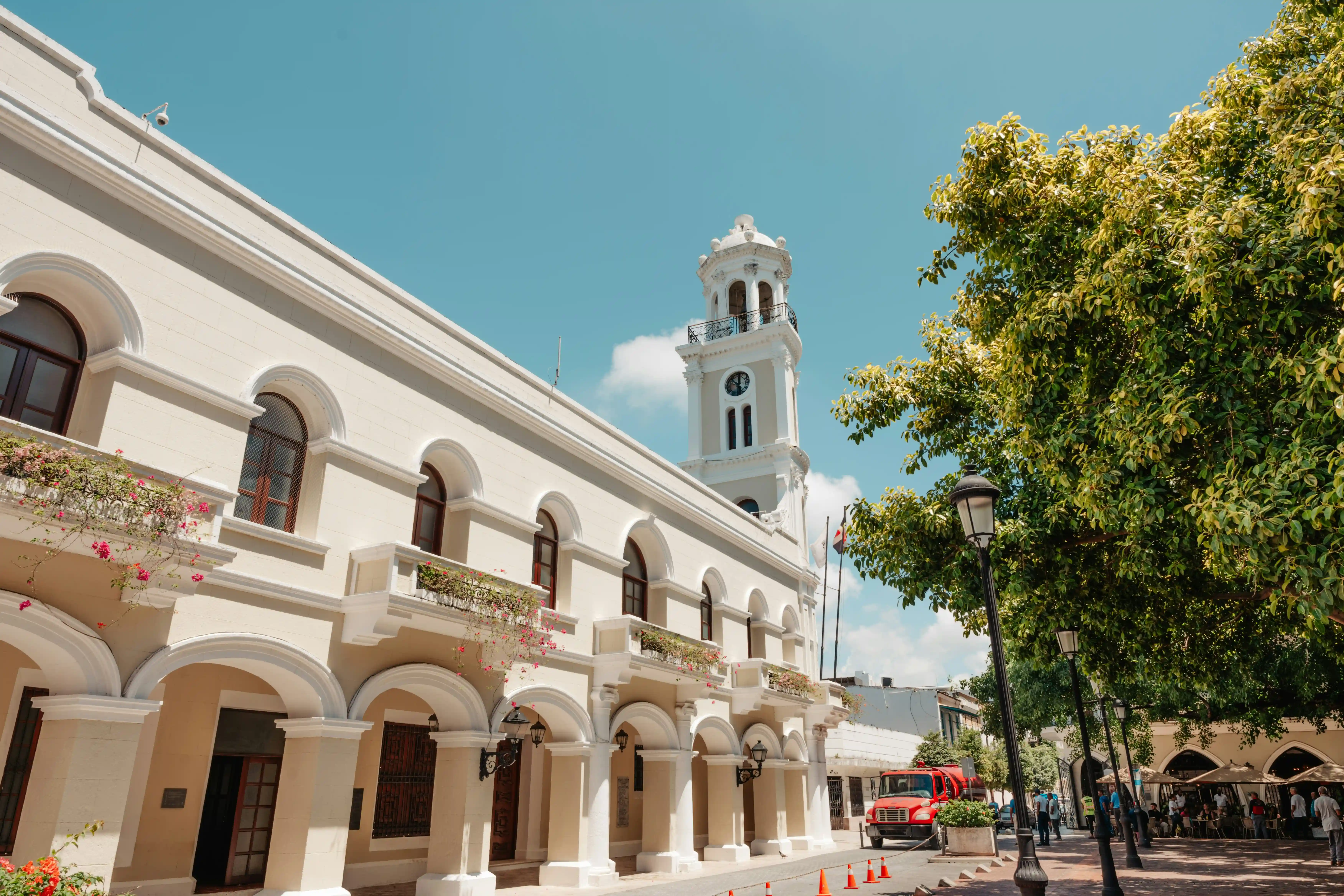
La Romana has a character shaped as much by its people and history as by the coastline around it.
Set on the southeastern Caribbean coast, the city grew alongside the sugar industry, with Central Romana playing a longstanding role in local employment, infrastructure, and commerce. That working-city identity remains visible today in its neighborhoods, shops, schools, and daily routines.
Yet only a short drive from the city center, the surroundings change considerably. At Casa de Campo, quiet residential roads lead toward golf courses, a marina, private beach facilities, and individually designed villas. Elsewhere along the coast, apartment developments and smaller beach communities offer their own ways of living near the water.
It is this variety that makes La Romana worth understanding beyond its reputation as a resort destination. A family looking for a home close to school, a boat owner seeking marina access, and someone searching for a seasonal apartment may all be interested in the same region, but their day-to-day experiences – and property budgets – will be quite different.
From the City to the Coast
Within La Romana itself, life follows the rhythm of an established Dominican city. Residential streets connect to supermarkets, local markets, banks, restaurants, healthcare facilities, and schools. Housing includes apartments, townhouses, and traditional family homes, often chosen for their proximity to work and everyday conveniences. Spanish is the main language of daily life, although visitors will encounter more English in tourism-oriented businesses and resort settings.
To the east, Casa de Campo offers a different residential setting across approximately 7,000 acres. Three Pete Dye-designed golf courses, a marina with around 370 slips, Playa Minitas, and the cultural village of Altos de Chavón are all part of its identity. Properties range from marina apartments and golf-course residences to large, custom-designed villas. The scale of the community also means that homes can differ significantly in their surroundings and access to amenities; ownership and membership arrangements are worth reviewing for each property.
West of the city, Playa Nueva Romana combines residential developments with golf and coastal recreation. Despite the name, it sits in San Pedro de Macorís Province, rather than La Romana Province. It remains a relevant option for buyers exploring this stretch of the southeast coast, particularly those comparing gated developments, apartments, villas, and building lots.
In the opposite direction, Bayahibe and Dominicus are known for their beaches, diving, restaurants, and access to boat excursions. These communities belong to La Altagracia Province, but their proximity makes them a natural part of a broader La Romana property search. They tend to appeal to buyers interested in seaside apartments, vacation homes, and a coastal atmosphere that differs from both the city and Casa de Campo.
The areas are close enough to explore in one visit, yet distinct enough that choosing between them is really a decision about how someone wants to live — near city services, within a private resort environment, or closer to beach-oriented activity.
Everyday Life, Education, and Healthcare
One of the conveniences of living in or near La Romana is having a functioning city close at hand. Residents of nearby gated communities may spend much of their leisure time within their developments, but the city remains useful for shopping, banking, medical appointments, and the services that come with owning a home. Everyday amenities are generally easier to reach from central neighborhoods, while outlying properties may require more driving.
For families, education is an important part of that decision. Abraham Lincoln School is one established option with English-language instruction, while Colegio Saint John offers another private-school choice in the city. Families living in Casa de Campo generally travel into La Romana for conventional primary and secondary education; the community also has early-childhood offerings. Curriculum, grades, admissions, and travel times should be checked directly with each school.
Healthcare is available locally as well. Central Romana Medical Center provides hospital and emergency services, and residents can also turn to facilities such as Cemer Clinic and Clínica de Familia. Depending on the treatment required, certain highly specialized services may involve travel to Santo Domingo.
Property infrastructure deserves the same practical attention as location. Water supply, wastewater arrangements, internet service, electricity backup, and maintenance responsibilities can differ between an apartment building, a city house, and a managed resort community. These are details best confirmed for the individual property rather than inferred from its neighborhood.
Life Along the Caribbean
It is easy to understand why the coast plays such a large part in La Romana's appeal. Within Casa de Campo, residents have access to a wide range of activities, from golf and tennis to equestrian sports, polo, and boating. The marina provides a lively setting for waterfront dining and sailing, while Altos de Chavón adds galleries, performances, and cultural events to the experience.
Beyond the resort, the Bayahibe–Dominicus coastline is associated with swimming, snorkeling, diving, and excursions to Saona Island. Catalina Island is another familiar destination for boat trips and marine activities. Together, these options give the region a varied recreational landscape, although access to individual beaches, clubs, and facilities may depend on memberships, property arrangements, or visitor policies.
Warm weather makes outdoor activities part of life throughout the year, but tropical conditions also influence how properties are maintained. Periods of heavy rain, humidity, and the Atlantic hurricane season from June through November make drainage, ventilation, storm preparation, and exterior upkeep worth considering. Homes close to the sea may need additional care where salt exposure accelerates corrosion.
Arriving and Getting Around
La Romana has the practical advantage of its own international airport. La Romana International Airport (LRM) sits close to the city and Casa de Campo and serves international, seasonal, charter, and private aviation. Scheduled commercial routes are more limited than those offered by the country's larger airports, so frequent travelers may also use the airports near Punta Cana or Santo Domingo.
Those alternatives are accessible by road, commonly taking around one to one-and-a-half hours from the La Romana area in favorable conditions, depending on the point of departure and traffic. The regional highway network connects the city with the eastern tourism corridor and the capital.
Within the region, having a car makes everyday life considerably easier. Short walks are possible in parts of the city, marina, and individual commercial areas, but schools, beaches, residential developments, and major shopping destinations are spread out. For someone buying outside the urban center, it is worth driving the routes they would actually use rather than judging convenience by a map alone.
Real Estate Vibe
The contrast between La Romana's city neighborhoods and its surrounding resorts is especially visible in the housing market. An apartment near central services serves a different purpose from a villa overlooking a golf fairway, and even properties of similar size can carry very different costs depending on their setting, management arrangements, and amenities.
Buyers will find practical city residences, condominiums in gated developments, villas outside the major resorts, and a separate luxury market within Casa de Campo. The indicative asking-price ranges below illustrate that breadth rather than a single citywide benchmark.
Property Type | Indicative Price Range | Popular Style |
|---|---|---|
City apartments | US$95K–US$240K | Urban residential |
Condos in gated developments | US$150K–US$270K | Contemporary with shared amenities |
Villas outside Casa de Campo | From approximately US$440K | Tropical residential |
Casa de Campo apartments | US$500K–US$1.3M+ | Mediterranean contemporary |
Casa de Campo villas | US$1M–US$3.5M+ | Caribbean and custom architectural |
Illustrative asking-price ranges carried over from the source draft, not verified closing-price statistics or independently calculated market percentiles. Location, condition, land area, and current inventory can move prices beyond these bands.
Market Snapshot
It is more useful to think of La Romana as several related property markets than one uniform destination. City apartments tend to be evaluated around everyday convenience, residential demand, and affordability. In resort communities, the calculation often includes golf or marina access, privacy, architecture, seasonal use, and the costs of maintaining larger properties.
The rental market follows a similar pattern. Longer-term housing serves residents of the city, while selected condos and villas cater to vacationers, families, and groups visiting the surrounding resorts. Seasonal demand can create opportunities, but published nightly rates are only one part of the picture: occupancy, management fees, staff, maintenance, and periods without bookings all affect the outcome.
Category | Overview |
|---|---|
Indicative property value | Source-draft median asking-price estimate of US$135K–US$185K for city apartments; Casa de Campo villas are frequently advertised above US$1M |
Rental market | Long-term residential rentals in the city; seasonal villa and condo rentals in resort communities |
Popular among | Local families and professionals, golfers, boat owners, retirees, and seasonal homeowners |
Community atmosphere | An established Dominican city alongside landscaped, privately managed residential and resort communities |
Investment considerations | Different entry prices and rental segments, with ownership costs, demand, and resale conditions varying by location |
Market figures are indicative estimates from the supplied draft, not independently verified current market averages. Rental income and investment returns require property-specific analysis.
Buying and Owning Property
Whether the property is an apartment in town or a home in a managed community, ownership begins with the same fundamentals: clear title, documented obligations, and a realistic understanding of costs. Property transfers in the Dominican Republic generally involve a 3% transfer tax under the applicable valuation rules; the Dominican tax authority (DGII) provides information about the process. Annual real-estate property tax (IPI), where applicable, depends on the owner, valuation, and current legal thresholds. Certain approved projects may qualify for CONFOTUR benefits, which should be verified for the specific property rather than assumed from its location.
For properties under construction, the developer's delivery obligations, progress, contracts, and infrastructure plans deserve careful review. With resale homes, buyers should examine title documentation, liens or other encumbrances, physical condition, building alterations, and outstanding association dues. Anyone planning to rent the property should also confirm community rules and management requirements before relying on income projections.
Advantages and Considerations
Advantages | Considerations |
|---|---|
A broad choice of city apartments, gated condos, and resort residences | Prices, fees, and resale conditions differ substantially between areas |
Golf, marina facilities, beaches, and coastal activities within easy reach | Access to some facilities depends on membership arrangements or additional fees |
A nearby international airport and access to PUJ and SDQ | LRM has fewer scheduled routes; alternative airports involve road transfers |
Established city services, schools, and medical facilities | School travel and specialized medical needs depend on the chosen location |
Residential and vacation-rental property segments | Seasonality, management, vacancies, and community rules influence actual returns |
Final Thoughts
What makes La Romana interesting is the way several different lifestyles exist within a relatively compact coastal region. The city offers an established local community and the services needed for everyday living, while Casa de Campo, Playa Nueva Romana, and the Bayahibe coast introduce other possibilities shaped by golf, boating, beaches, and private residential settings.
Each comes with its own practical rhythm. School journeys, airport routes, membership arrangements, maintenance costs, and the rules governing a property can matter just as much as its architecture or view. Taking time to understand those differences makes it easier to identify not simply an attractive home, but a location that fits the way it will actually be used.
For anyone exploring the southeastern Dominican Republic, La Romana is a place worth getting to know on its own terms – a working city with a long history, a distinctive coastline, and a surprisingly wide range of places to call home.

Get to know The Neighborhoods
Discover what makes each neighborhood unique and find the one that fits your lifestyle
Explore Other Cities
See what’s nearby and find the one that feels like home


Listings in this city
Properties in La Romana
Property Advisors in La Romana