Santiago
Explore Santiago de los Caballeros through its neighborhoods, cultural traditions, everyday conveniences, and the residential market at the heart of the Cibao Valley
Overview
Santiago de los Caballeros is the Dominican Republic’s second-largest city and one of the principal economic and cultural centers of the Cibao Valley. Surrounded by a region known for agriculture, industry, and commerce, Santiago has developed a strong identity of its own – shaped by family businesses, universities, the tobacco and cigar tradition, and a long-established residential population.
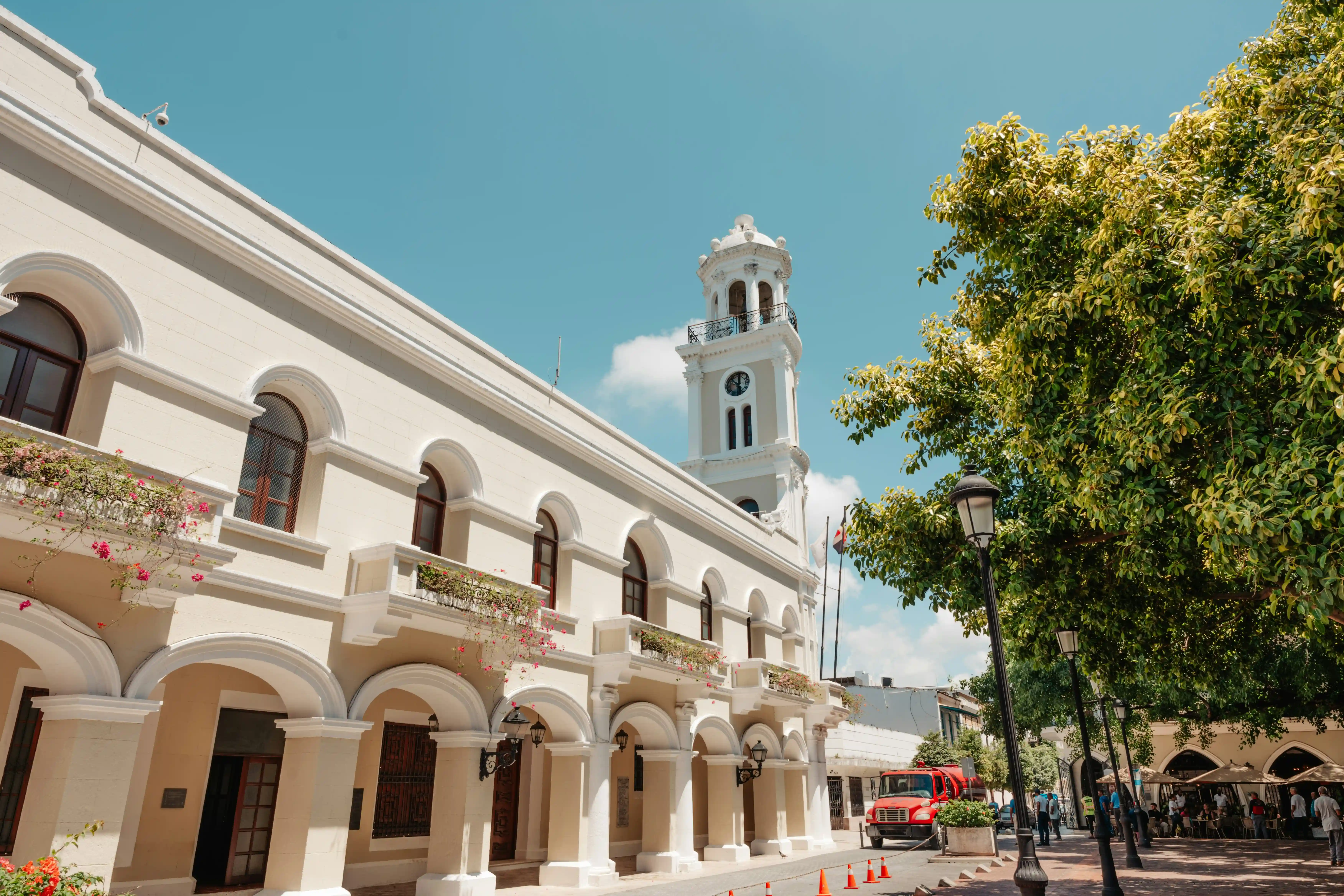
The Monument to the Heroes of the Restoration is perhaps its most recognizable landmark, but the city is equally defined by what happens around it: busy commercial avenues, neighborhood cafés, cultural institutions, and residential streets where much of daily life unfolds.
For those exploring the possibility of living here, Santiago offers the services and opportunities of a major city without being centered on resort tourism. Its property market reflects that character, with apartment buildings in established urban sectors, family houses in quieter neighborhoods, and newer residential projects spreading toward the city's outer areas.
A City with Its Own Rhythm
Santiago sits inland, connected to Santo Domingo by the Duarte highway and within reach of the mountains around Jarabacoa. That location shapes both its working week and its weekends. The city is an important base for business, education, healthcare, and services in northern Dominican Republic, while mountain retreats and the north coast offer a change of scenery without requiring a flight.
Its cultural life adds another dimension. The Centro León brings together exhibitions and programs devoted to Dominican art and history, while the Monument and surrounding public spaces remain familiar gathering points. The city's restaurants, shops, universities, and sporting activities give residents a variety of ways to spend time close to home.
Santiago can feel more locally oriented than coastal destinations built around international visitors. That offers a genuine connection to Dominican everyday life, although newcomers who do not speak Spanish may find that learning the language makes errands, professional services, and community connections considerably easier.
Getting to Know Santiago's Residential Areas
Santiago's neighborhoods vary in building density, street activity, housing styles, and access to schools or commercial areas. Looking at a property in isolation tells only part of the story; the surrounding sector often determines what everyday life will feel like.
Los Jardines combines established apartment buildings and residential streets with access to restaurants, shops, and the wider city road network. It is a practical choice for those who prefer to stay close to daily services rather than move to the outer edges of Santiago.
Nearby, Cerros de Gurabo and La Esmeralda are known for their mix of houses and apartment residences, including newer buildings in certain streets. Their appeal often comes from balancing a residential setting with access to schools, shopping, and destinations such as Centro León. As in any city neighborhood, the atmosphere and traffic can vary noticeably from one block to another.
Farther into the broader Gurabo and Llanos de Gurabo areas, buyers encounter a wider range of homes, from relatively compact apartments to larger family properties. The variety of developments also means that access roads, shared amenities, parking, and homeowners' association arrangements deserve attention when comparing listings.
Las Carmelitas includes substantial private houses and established residential surroundings, with selected properties positioned at the upper end of the local market. Meanwhile, the historic center and Monument district offer closer contact with Santiago's commercial and civic life, where shops, workplaces, older architecture, and busy streets sit alongside residential properties.
There is no single Santiago neighborhood that suits everyone. A family prioritizing school routes may choose differently from someone who wants to walk to restaurants, and both may have different requirements from a buyer looking for a quieter home with a garden. Visiting an area at different times of day is often more revealing than relying on distance estimates alone.
Everyday Life, Education, and Healthcare
Much of Santiago's appeal as a place to live comes from its established services. Major shopping centers, supermarkets, pharmacies, medical facilities, gyms, and restaurants are distributed across the city, making it possible to organize everyday life around the neighborhood rather than around occasional trips to a resort or tourist district.
Private cars are common for commuting and errands. Public transportation options exist, but their convenience depends on the journey, and traffic at peak hours can add time to relatively short routes. When choosing a home, proximity to a school or workplace is often more meaningful than the distance shown on a map.
For families, Santiago offers private and bilingual school options alongside a substantial higher-education sector. The Pontificia Universidad Católica Madre y Maestra (PUCMM) has a longstanding campus here, contributing to the city's student life, professional community, and educational activity. Families comparing primary or secondary schools should confirm current curricula, language of instruction, grade availability, fees, and commute times directly with each institution.
Healthcare is another established part of the city. Hospital Metropolitano de Santiago (HOMS) provides 24-hour emergency care and a range of hospital services, supported by other private and public healthcare facilities throughout Santiago. Access to a particular specialty, physician, or insurance network should still be checked individually rather than assumed from the presence of a large hospital.
For residents who need a combination of schooling, professional services, and medical care, this existing urban infrastructure is an important part of Santiago's residential appeal.
Connections, Mountains, and the North Coast
Cibao International Airport (STI) lies southeast of the urban center and connects Santiago with destinations in the United States and elsewhere in the region. For frequent travelers and Dominicans living between countries, having an airport close to the city can make a meaningful difference. Routes and frequencies vary by airline and season, so specific connections should always be confirmed before planning regular travel.
On the ground, the Duarte highway connects Santiago with Santo Domingo, while other roads lead toward the Cibao's mountain towns and the Atlantic coast. Jarabacoa, with its rivers, cooler evenings, and outdoor activities, is a popular mountain destination. Constanza offers another highland setting, while Puerto Plata and the north coast provide access to beaches and coastal recreation.
Approximate travel times can be useful for planning, but traffic, weather, departure point, and road conditions all affect the journey. The same applies within the city: a home that appears conveniently located should be assessed against the actual routes its occupants expect to use.
Santiago has a warm inland climate, with periods of higher temperatures, humidity, and seasonal rainfall. Homeowners may want to consider ventilation, air-conditioning, water drainage, and backup utility arrangements when reviewing a particular building.
Real Estate Vibe
Santiago's property market is shaped primarily by residential demand. Much of the inventory consists of apartments and family houses intended for everyday use, although newer buildings and gated developments have broadened the available choices. Prices vary by sector, floor area, age, finishes, parking, amenities, and whether a property is completed or still under construction.
The following are illustrative asking-price bands drawn from the supplied market draft, not independently verified transaction averages. Individual properties may be advertised above or below these ranges.
Property Type | Indicative Price Range | Popular Style |
|---|---|---|
Apartments in entry-level sectors | US$95K–US$140K | Practical residential |
Apartments across established sectors | US$145K–US$260K | Modern residential |
Apartments in premium sectors | US$290K–US$450K+ | Contemporary apartment towers |
Family houses | US$180K–US$450K | Traditional and contemporary residential |
Larger houses in premium sectors | US$1M+ | Custom architectural |
Ranges are indicative only. Neighborhood, building quality, property condition, services, and current availability can affect asking prices substantially. Compare active listings with recent, relevant transactions wherever possible.
Market Snapshot
Unlike markets driven mainly by holiday stays, Santiago is supported by people who live, work, study, and operate businesses in the region. This creates a different pattern of housing demand: long-term residential rentals are generally more relevant than short-term vacation accommodation, and proximity to everyday services can carry considerable weight.
Apartments attract buyers looking for manageable homes near the city's commercial and educational centers, while houses remain relevant to families seeking more space. New construction adds choice, although the quality of project delivery, common-area management, and long-term maintenance can vary from one development to another.
The draft's approximate median asking price and rent figures are useful as initial context, but they should not be treated as verified citywide averages without a dated and clearly defined sample. A more reliable investment assessment compares properties of similar type and condition within the same sector and accounts for vacancy, association fees, taxes, repairs, insurance, and management costs.
Category | Overview |
|---|---|
Indicative property value | Draft estimate: approximately US$190K median asking price for apartments; houses commonly advertised around US$180K–US$450K |
Indicative asking price per m² | Draft estimate: approximately US$1,500–US$1,600, subject to verification and sample definition |
Rental market | Primarily long-term residential rentals; draft citywide median-rent estimate of approximately US$790/month, not independently verified |
Popular among | Local families, working professionals, returning Dominicans, retirees, and long-term residents |
Community atmosphere | Active, locally oriented, family-centered, with character varying considerably by sector |
Investment appeal | Broad end-user demand, varied entry prices, universities, healthcare, and an established regional economy |
Market figures are illustrative estimates from the original draft, not independently verified closing-price statistics or rental-performance guarantees. They should be refreshed against current listings and comparable transactions before publication as market benchmarks.
Property Taxes and Purchase Considerations
Property purchases in Santiago follow the Dominican Republic's broader legal and tax framework. Real-estate transfers are generally subject to a 3% transfer tax, calculated under the applicable rules and exemptions; the DGII's property-transfer guidance provides further details. Annual property tax (IPI), when applicable, depends on ownership circumstances, assessed values, and thresholds in effect for the relevant year.
Tax incentives, including CONFOTUR benefits, apply only where the specific project has the necessary approval and the buyer and transaction meet the relevant requirements; they should not be assumed for ordinary residential properties in Santiago.
For off-plan purchases, review the developer's track record, contractual delivery terms, payment schedule, construction progress, and utility provisions. For completed and resale properties, verify title, encumbrances, building condition, association balances, and any alterations. Investors should also confirm rental permissions and examine realistic net operating costs rather than relying on advertised gross yields.
Advantages and Considerations
Advantages | Considerations |
|---|---|
Established employment, retail, university, and healthcare infrastructure | Rush-hour traffic and daily commute times differ by sector |
Wide selection of apartments and family homes at varied price points | Building quality, HOA arrangements, and resale liquidity require property-level review |
International airport close to the city | Available destinations and flight frequencies vary by season |
Mountains, rivers, and north-coast beaches accessible by road | Santiago is inland, so beach visits involve a drive |
Strong local identity and year-round residential activity | Spanish is valuable for everyday communication and administrative matters |
Final Thoughts
Santiago offers a different perspective on life in the Dominican Republic. Its identity is rooted in the Cibao's businesses, cultural traditions, educational institutions, and established neighborhoods, giving it the depth and everyday activity of a major city while keeping the mountains and north coast within reach.
That variety extends to its homes. A central apartment, a family house in Gurabo, and a larger residence in Las Carmelitas may sit within the same city yet offer very different routines, budgets, and surroundings. Choosing well means looking beyond the property itself to the streets, schools, commute, services, and community around it.
For those seeking an established urban environment with a strong sense of place and a wide choice of residential options, Santiago is a city worth getting to know — one neighborhood at a time.

Get to know The Neighborhoods
Discover what makes each neighborhood unique and find the one that fits your lifestyle
Explore Other Cities
See what’s nearby and find the one that feels like home


Listings in this city
Properties in Santiago
Property Advisors in Santiago